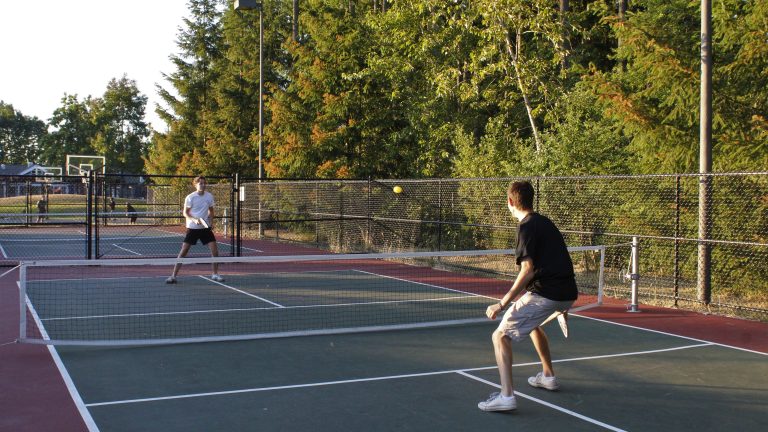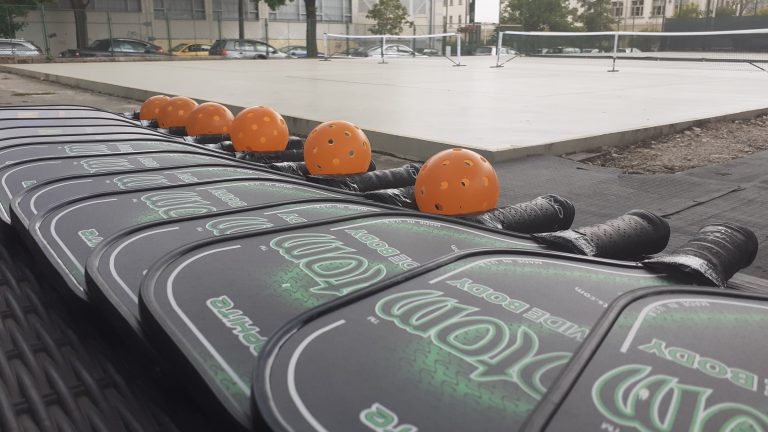

In Terenure, Dublin, the Filipino Ireland Pickleball Club gives nurses, carers and retirees three hours on Monday and Friday evenings to play.
The short answer: The Filipino Ireland Pickleball Club plays in Terenure, Dublin, for three hours on Monday and Friday evenings, bringing together nurses, healthcare assistants, retirees and spouses for a €10 session. It began in July 2025 with Gale, Jay and a few tennis players, and now includes beginners such as Jud Villa Hermosa, who entered a tournament at 69.
Jud Villa Hermosa had been playing pickleball for two weeks when he entered his first tournament.
He was 69, recently retired and still learning the peculiar geography of the court: where to stand, when to move forward, why the area closest to the net was called the kitchen and why everybody seemed so eager to reach it. A background in tennis gave him a start, although pickleball had its own rhythms and traps. The court was shorter than he was used to, the ball less obedient than it appeared, and experienced opponents had a way of placing it exactly where he had just been.
Jud came to Ireland from Pangasinan in the Philippines in 2004. He worked as a dialysis nurse at Beaumont Hospital in Dublin, his professional life organised around patients, procedures and the routines of a hospital ward. When that career ended, the structure around it went too. Retirement left time, but time is not the same as having somewhere to go.
Then he found the Filipino Ireland Pickleball Club.
Plenty of the players around him had been involved longer. Some came from tennis, badminton or table tennis. Others had learned everything they knew about racket sports in the months since joining. Many still worked in healthcare and arrived carrying the fatigue of a hospital shift. Jud had barely learned the game.
He entered the tournament anyway.
By then, the club had become large enough to contain several versions of pickleball at once. There were players who wanted hard matches and medals, beginners still counting the score aloud, friends who valued the evening as much as the result and people beginning again at 69. Jud did not have to decide which sort of member he was before being allowed onto the court.
On Monday and Friday evenings in Terenure, the hall belongs to them for three hours. Bags gather beside the courts. Nets go up. Somebody collects the €10 session fee and players arrange themselves into fours. Nurses, healthcare assistants, retirees and spouses become partners and opponents. The work clothes have gone, although the day has not always left them.
At nine o’clock, the nets come down again. Some players will be home quickly. Others still have a county or two to cross.
A game after work

The club began in July 2025 with Gale, Jay and a small group of tennis players. Four to six people might attend an early session, enough for one doubles court if everybody arrived.
Gale had come to Ireland from Misamis Occidental in 2007 and now works as a healthcare assistant at St James’s Hospital. She and Jay were not setting out to build a national organisation. They wanted to play.
That modest aim created its own list of jobs. A court had to be found. Equipment had to be brought. Money had to be collected. Someone needed to know whether the fourth player was still coming, then find a replacement when the answer arrived too late.
The first sessions grew through the familiar routes of Filipino life in Ireland: friends, relatives, colleagues and colleagues of colleagues. A player would mention the game at work. Somebody with a badminton background would decide to try it. A spouse would come along. People who had never held a paddle discovered that the first rally was not far away, even if becoming good would take considerably longer.
Soon, the problem was no longer finding four players.
The club now reports around 160 to 170 active participants, although that does not mean every one of them appears in Terenure each week. The number shows how far the group has travelled since those first sessions. The journeys made by individual members say more about why it has lasted.
Players come from Kildare and Dundalk. Marco travels from Tipperary, roughly two hours in each direction. A three-hour session may therefore require seven hours of his day, before finding the paddle, filling the car and recovering from the drive are considered.
There are closer places to exercise. There may be closer pickleball courts. What Marco cannot find nearby is this particular room.
Dorin and Halep are among those who shape their Monday and Friday plans around the sessions. For people working hospital rotas, an evening cannot always be protected simply by writing pickleball in a diary. Shifts change. Work runs late. Fatigue makes its case. Family life has its own claims on the hours after work.
Still, the players arrive.
There is a danger in turning that effort into a sentimental story about healthcare workers finding relief through sport. The people in Terenure are not present as symbols of service or sacrifice. They have already spent enough of the day being responsible for other people. They come because they enjoy pickleball, want to improve and care about whether they win.
A difficult shift need not become the evening’s subject. Nor does anybody have to spend three hours discussing migration or homesickness. Much of the time will be occupied by scores, missed serves and the partner who keeps attacking a ball from a position that makes a successful attack almost impossible.
The pleasure lies partly in being ordinary together.
Shared experience remains in the room without requiring an announcement. Many members understand the peculiarities of working in Irish healthcare, living far from family and constructing a social life around rotas and long journeys. Familiar accents and jokes shorten the distance. Then somebody serves and attention moves to the next point.
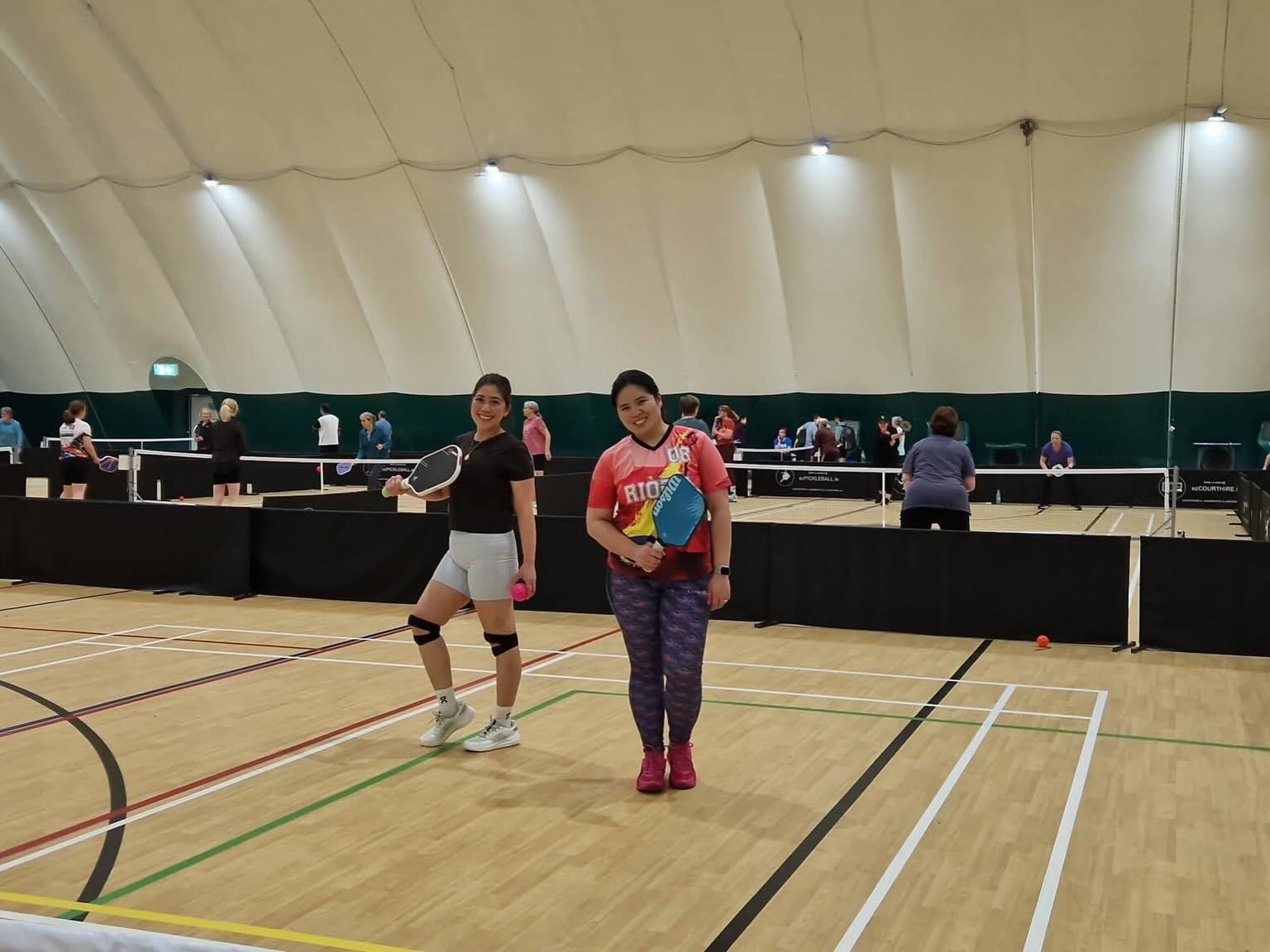
That shift of attention matters. The club is social because the pickleball is taken seriously. People remember who beat them. Partnerships develop. Beginners receive advice, some of it requested. Tournament results linger in conversation after the event. The game gives the gathering its shape and keeps the welcome from becoming vague.
People are needed on court. Turning up has value.
If you're following how the global game is shifting week by week, the World Pickleball Report breaks this down every day in our morning briefing.
Filipino and Irish
The club’s name is exact: Filipino Ireland Pickleball Club.
It does not hide the identity of the people who built it, nor does it make ancestry a condition of entry. Irish spouses and players from other backgrounds attend. They join a club whose Filipino character is already established and does not have to be weakened to accommodate them.
That character can be felt in the routes by which people arrive. It sits in the overlapping histories of those who left different parts of the Philippines, settled in Ireland at different times and found one another through work, family and sport. Gale came from Misamis Occidental. Jud came from Pangasinan. Their lives converged in a Dublin sports hall because somebody started booking pickleball courts.
Ireland is where members have built careers, raised families and, in Jud’s case, reached retirement. The Philippines is not reduced to nostalgia. Both places are present in the people playing.
The game fits comfortably between them. Pickleball carries less inherited ceremony than many established sports. A newcomer does not have to understand decades of local club politics or prove a childhood attachment before taking part. The equipment is simple enough to transport, the court can be adapted from other spaces and doubles creates an immediate need for company.
In Terenure, nobody appears especially concerned with protecting pickleball’s American origins. The sport belongs to the players who have paid for the hall and put up the nets.
That sense of ownership has survived the club’s rapid growth, although growth brings administration close behind it. Six friends can make decisions in a group chat. More than 100 players need to know who is booking the courts, handling fees, arranging events and speaking on behalf of the club.
Filipino Ireland has started adopting by-laws, defined officers and a more formal structure. It is also seeking greater recognition from councils and sporting bodies. None of this has the immediate appeal of playing. It is the work required to ensure that courts remain available and that a club does not become a victim of its own popularity.
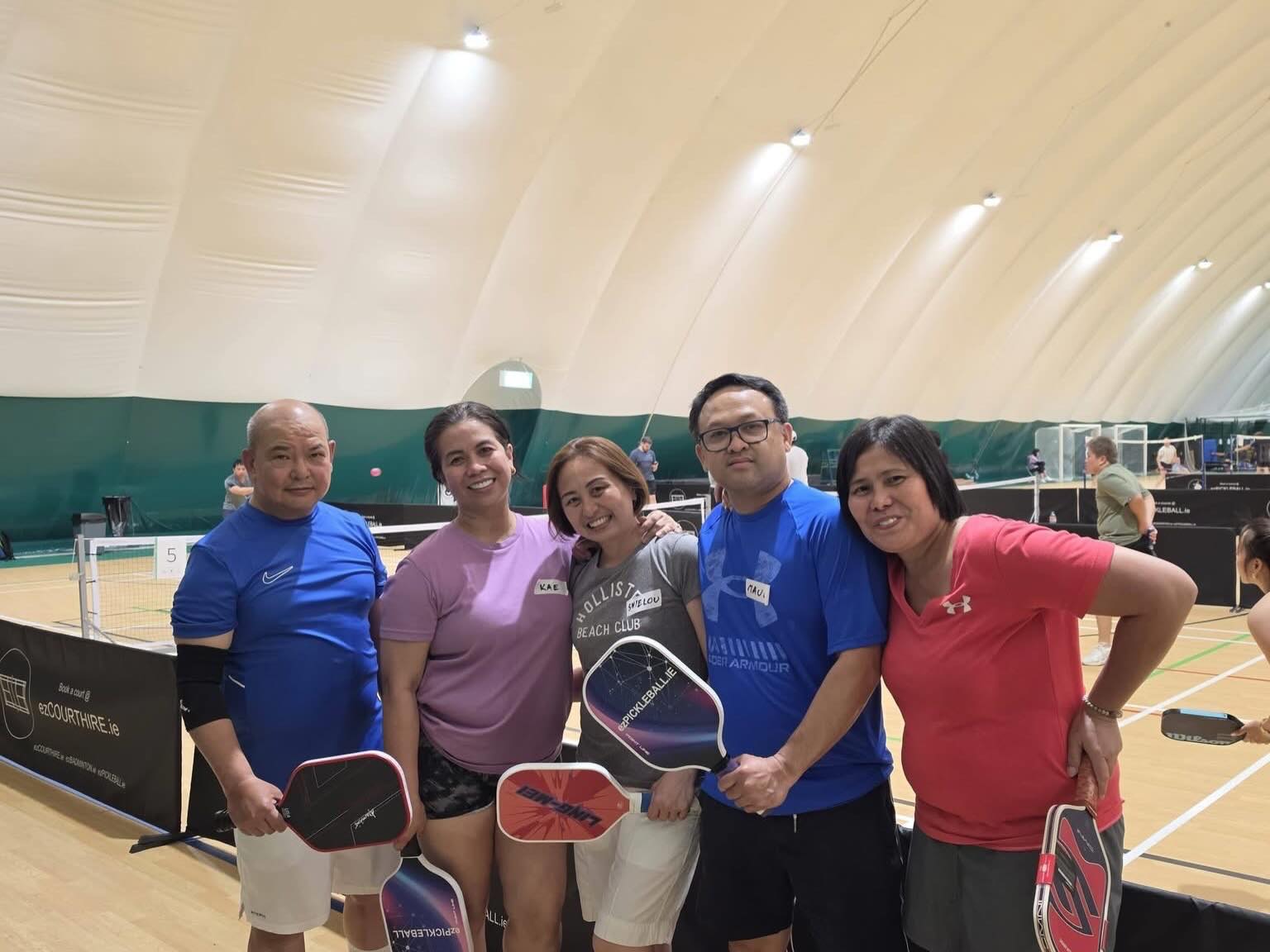
The tournaments reveal the changing scale. Thirty-two players competed in May. In August, the number rose to 52.
Jud entered the larger event after those first two weeks of learning. His tennis experience helped, but tournament play was its own education. Scores lasted longer in the memory. Partnerships mattered more. The shots that worked against another beginner returned faster when struck towards somebody experienced.
Nobody asked him to complete a probationary period. He learned by standing on the court.
That ease of entry is worth protecting as the organisation becomes more ambitious. Formal structures can keep a club stable, especially when demand for court time grows. They can also produce hierarchies that were barely visible when everybody knew one another. Tournament players want strong games. Beginners need time to make beginner mistakes. Other members may be happy to improve slowly while preserving the social rhythm of the evening.
The club will have to accommodate all three without making any of them feel they have misunderstood why it exists.
The answer is unlikely to be found in a mission statement. It is there in the weekly arrangements: who gets invited into a four, whether the new player receives a proper game, whether Jud can enter after two weeks, whether Marco is told before beginning his drive from Tipperary that the session has changed.
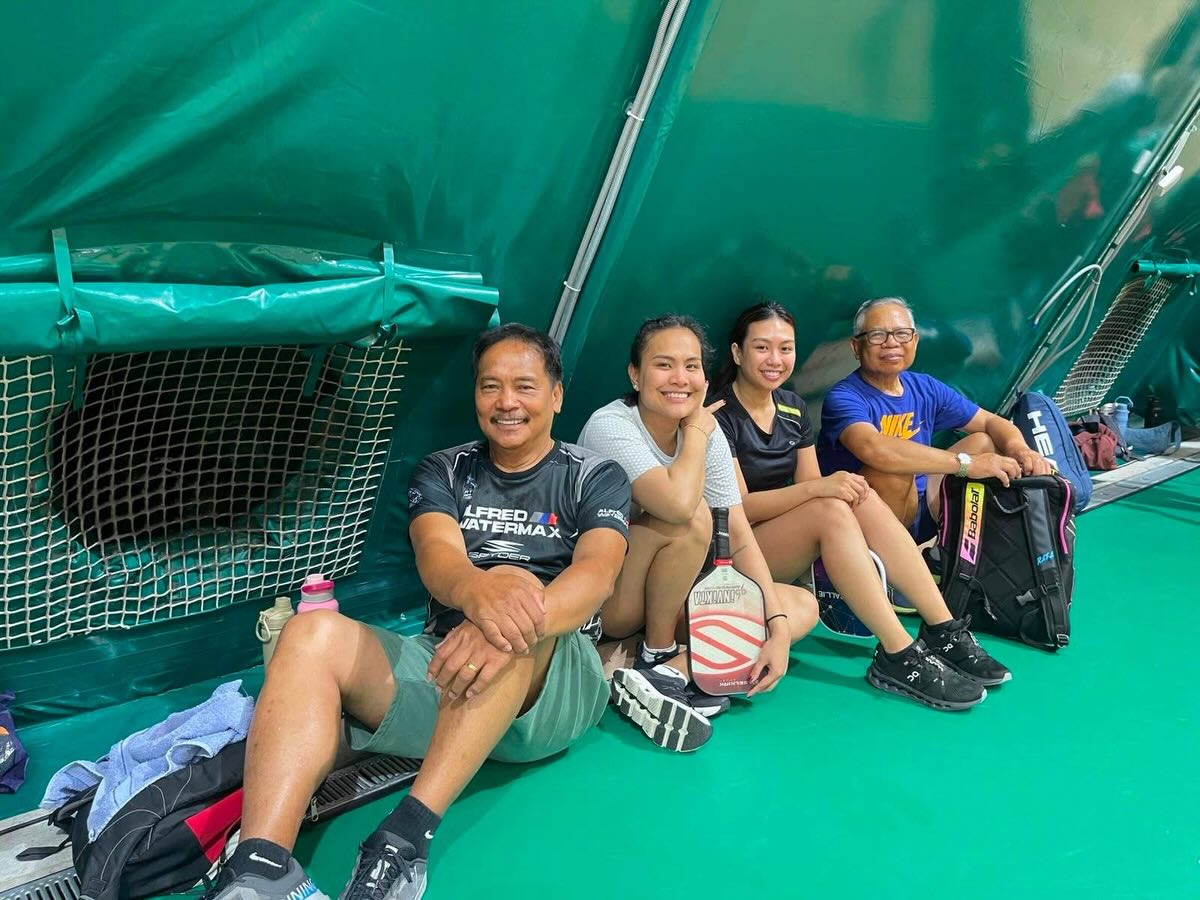
A community of 160 people is still built through individual acts of consideration.
Packing away
As the booking approaches its end, balls have to be recovered from beneath benches and along the edges of the hall. The nets are dismantled and returned to their bags. Paddles disappear into cases. Conversations continue near the doors, where players discover that leaving a three-hour session can take another 20 minutes.
Gale can look around the hall and see what grew from the first four or six players. The small group she and Jay gathered in July 2025 now includes people arriving from across Ireland, a retired nurse learning tournament pickleball and workers who have protected the evening from the rest of the week.

The members who live nearby will soon be home. Those travelling towards Kildare, Dundalk or Tipperary check the time before setting off. For Marco, another two hours may remain.
The drive makes sense because courts and communities are different things. Another venue could offer the correct lines, the same net height and enough players for doubles. It could not reproduce the accumulation of friendships, jokes, rivalries and shared history waiting in Terenure.
Jud knows something about the value of having a place to arrive. For years, Beaumont Hospital supplied the routine of his working life. Now there are Mondays, Fridays and tournament entries, new shots to practise and people who expect to see him again.
Pickleball has not made Ireland and the Philippines geographically closer. It does not recover missed family occasions, shorten a hospital shift or reduce the miles between Tipperary and Dublin.
The hall empties anyway. The lights go out, the doors close and the players begin their journeys home, carrying their paddles and a little of the room with them.
Frequently asked questions
In Terenure, Dublin, on Monday and Friday evenings.
In July 2025.
€10.
For a clearer view of where the sport is heading each week, you can join the World Pickleball Report here.

Chris Beaumont
Founder and Editor-in-ChiefChris Beaumont is the founder and Editor-in-Chief of World Pickleball Magazine, published by World Pickleball Media Ltd. He follows the global game closely, reporting on news, developments, stories and tournaments from all five continents. He also hosts the World Pickleball…
View All Articles →