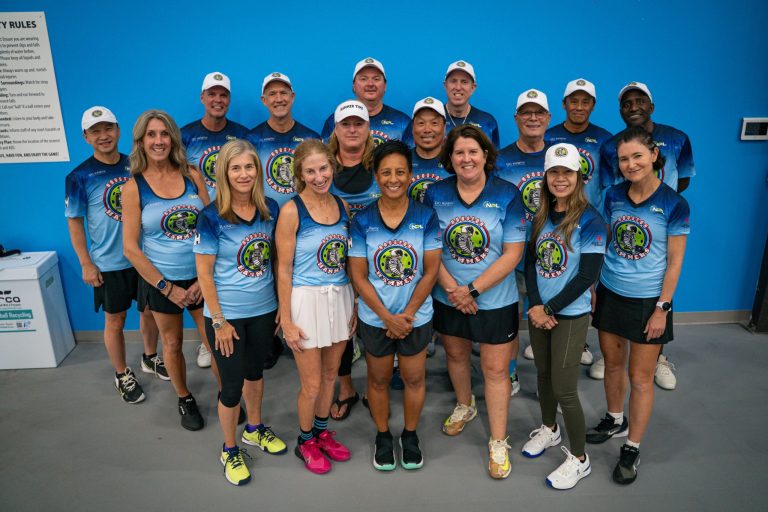

Tama Shimabukuro went first overall to the Viet Panthers as MLP Asia’s draft favoured Asian-connected players over US names like Riley Newman.
The short answer: MLP Asia’s inaugural rosters are complete, and 15-year-old Tama Shimabukuro went first overall to the Viet Panthers. Five of the first six international picks have strong links to Asia, while Americans Riley Newman and Connor Garnett went undrafted. Each six-player roster has three domestic and three international players under a US$250,000 cap covering salaries and draft bids.
MLP Asia’s inaugural rosters are complete. From Tama Shimabukuro going first overall to established American names being left undrafted, the selections reveal a league trying to build an Asian identity rather than simply import one.
Key takeaways
- Fifteen-year-old Tama Shimabukuro was selected first overall by the Viet Panthers after also going ninth in the 2026 US Major League Pickleball Draft.
- Five of the first six International Draft selections have strong competitive connections to Asia, while established American professionals Riley Newman and Connor Garnett went undrafted.
- Each six-player roster contains three domestic and three international players, ensuring half of every MLP Asia team comes from its home market.
- Teams operated beneath a US$250,000 cap covering both player salaries and bids for draft position, turning roster construction into an exercise in value as well as talent.
- The selections suggest the emerging professional player market is increasingly moving in both directions between Asia and the United States.
Tama Shimabukuro is 15 years old and has just won his second PPA Tour Asia singles title. Earlier this year, the Utah Black Diamonds made him the ninth selection in the Major League Pickleball draft in the United States.
Riley Newman has spent years among the most recognisable doubles players in professional pickleball.
On Sunday, when six franchises assembled the international half of their rosters for the inaugural MLP Asia season, the Viet Panthers secured the right to choose first and took Shimabukuro.
Newman was not selected at all. Neither was Connor Garnett, another established American professional who already plays for the Utah Black Diamonds in the US version of Major League Pickleball.
Those decisions are more revealing than a conventional list of winners and losers from draft night.
Across 18 selections, MLP Asia’s franchises showed that they are not simply trying to transplant an American professional league into Asia and populate it with the most familiar names available. They appear to be valuing players whose careers already intersect with the region, combining them with domestic talent and selectively importing experience from the United States where it fits.
That distinction could define the league’s first season.
The International Draft completed six-player rosters for the Dragon Warriors, Hong Kong Cannons, Malayan Stripes, Manila Helios, Team Tokyo and Viet Panthers, each of which had already selected three domestic players. Every franchise then added three international players, producing the 36-player field that will begin MLP Asia’s inaugural season in Japan on November 13.
The names matter. The way teams valued them tells us considerably more.
This was a market as much as a draft
MLP Asia did not determine its draft order by league position or lottery. Before each international round, franchises bid for selection position, with the highest bidder choosing first.
That created a market before a player had even been selected.
Every franchise operated beneath a US$250,000 cap covering both its auction spending and player salaries. According to MLP Asia’s official explanation of the International Draft, those salaries were determined by World Pickleball Ranking: a top-20 player carried a US$25,000 salary, somebody ranked from 21 to 50 cost US$10,000, while players ranked 51 or lower cost US$5,000.
The result was an unusually revealing exercise in valuation.
A franchise could not simply identify the best player available and take them. It had to decide how much the opportunity to make that selection was worth, add the player’s salary cost, consider the composition of the three domestic players already on its roster and calculate what would remain for subsequent rounds.
Ranking could therefore work both ways. A higher-ranked player brought demonstrated quality but also consumed more of the cap. A cheaper player could offer greater value if a team believed their ability exceeded their ranking, particularly in a professional Asian landscape where reputations and rankings are still developing quickly.
Every pick was partly a judgement about the present and partly a bet on what happens next.
Which makes the identity of the first player selected particularly interesting.
Shimabukuro is no longer simply a prospect
Calling Shimabukuro a bet on youth understates where his career has already reached.
The 15-year-old arrived at the draft immediately after winning men’s singles at the PPA Tour Asia Kuala Lumpur Cup, his second singles title on the Asian tour. More significantly for the idea that MLP Asia is operating in a separate talent universe, Shimabukuro had already been selected ninth in the 2026 US MLP Draft.
His value now crosses both systems.
The Viet Panthers were therefore not choosing an intriguing Asian-based teenager instead of an established professional. They were taking a player who is simultaneously becoming part of American Major League Pickleball and one of the most compelling young figures competing on the Asian tour.
That is a different proposition.
The remainder of the first round made the point stronger.
South Korea’s Eunggwon Kim went second to the Malayan Stripes. Kim currently sits just outside the World Pickleball Ranking top 20 and has established himself as one of South Korea’s leading players.
The Hong Kong Cannons then selected India’s Armaan Bhatia third.
Bhatia is another player whose career complicates any simple division between Asian and American professional pickleball. He was the 14th selection in the 2026 US MLP Draft, joining the SoCal Hard Eights, and currently sits inside the top 20 of the overall World Pickleball Ranking.
Manila took Japan’s Seina Shima fourth. Shima was selected for UPA Asia’s 2026 Rising Stars programme, giving her a one-year professional contract and development support as she establishes herself on PPA Tour Asia.
Team Tokyo chose Nasa Hatakeyama fifth, a Japanese player whose racket-sport background includes national collegiate tennis titles and three All-Japan padel doubles championships. Since moving into pickleball, he has already reached a PPA Tour Asia men’s singles final.
Only with the sixth and final selection of the first round did the Dragon Warriors take an American, Grayson Goldin.
Five of the first six players selected therefore had direct competitive roots in Asia.
That is difficult to dismiss as coincidence.
Half of every team belongs to its market
The international selections become more meaningful when placed alongside MLP Asia’s Domestic Draft.
Each franchise had already selected three domestic players, including at least one man and one woman, before Sunday’s auction. One of those players serves as captain.
The Dragon Warriors entered with Lingwei Kong, Anni Xie and Longsheng Liu. Hong Kong had Hong Kit Wong, Nok Yiu Tang and Marco Leung. The Malayan Stripes had Jimmy Liong, Syed Uzair and Athilla Miasara.
Manila’s domestic core consisted of Kim Saraza, Jacob Diago and Macy Ybanez. Team Tokyo had Yuta Funemizu, Aiko Yoshitomi and Rika Fujiwara, while the Viet Panthers began with Quan Do, Hien Truong and Sophia Nhi Huynh.
WPM examined those foundations before the International Draft in Before the Stars Arrive, MLP Asia Is Building Around Home.
Half of every MLP Asia roster is therefore domestic by design.
That matters because one of the easiest mistakes for an expanding sport to make is to confuse importing quality with creating a local professional culture. A league can bring famous players into a market and produce excellent matches without giving spectators much reason to believe the competition belongs to them.
MLP Asia’s structure prevents its franchises from becoming six collections of imported professionals wearing Asian city names.
The International Draft then allowed each team to decide what should be built around that domestic foundation.
The Panthers paired their Vietnamese core with Shimabukuro, Kaitlyn Christian and Ho Tam. Hong Kong added Bhatia, Chao Yi Wang and Kei Sawaki. Team Tokyo stayed heavily connected to Japanese and Korean pickleball through Hatakeyama and Mihae Kwon before adding American Daniel Moore.
The Malayan Stripes followed Kim with Xiao Yi Wang-Beckvall and Lacey Schneemann. Manila combined Shima with Muhammad Aiman and Mayu Ito, while the China-based Dragon Warriors added Goldin, Jamie Wei and Luc Pham.
Wei is another particularly revealing selection. She was the fifth overall pick in the US MLP Draft earlier this year, taken by the Chicago Slice, yet went in the second round in Asia.
The talent is beginning to move in both directions.
What does an undrafted American star actually tell us?
That makes the absence of Newman and Garnett more interesting, but it also means it needs to be interpreted carefully.
Neither omission proves that MLP Asia’s franchises believe those players are inferior to the 18 who were selected.
The financial mechanism does not allow that conclusion.
Garnett was sufficiently valued within American MLP to be retained by Utah for the 2026 season. Newman brings an extensive doubles résumé and years of experience near the top of the professional game.
But MLP Asia was asking a different question.
What is that player worth within this cap, alongside these domestic players, when acquiring a favourable draft position itself costs money?
That distinction matters.
A franchise might prefer a player carrying a lower salary cost if it believes the competitive difference is smaller than the financial difference suggests. It might value somebody who has competed regularly in Asian conditions, knows potential teammates or opponents and already has recognition within the regional audience. Gender balance, doubles compatibility and flexibility across the MLP format can all influence roster construction too.
Without individual teams explaining their decisions, assigning one motive to Newman’s or Garnett’s omission would be guesswork.
The collective result is still striking.
Six franchises were given an international player pool and a financial system within which to value it. None concluded that either man represented the best use of one of its three international roster positions.
Reputation earned in the United States clearly matters in MLP Asia.
It is equally clear that reputation alone is not enough.
The border between American and Asian pickleball is already blurring
There is a temptation to frame the development of professional pickleball in Asia as a straightforward contest between imported American stars and emerging Asian players.
The draft suggests the reality is becoming more interesting.
Shimabukuro plays MLP in America and wins singles titles in Asia. Bhatia represents India while playing for the SoCal Hard Eights. Wei was a top-five US MLP draft selection before being selected by the Dragon Warriors. Goldin competes throughout the American professional ecosystem and will now represent a Chinese franchise.
The player market is becoming international before MLP Asia has even staged its first match.
That development has already been visible elsewhere on the regional calendar. WPM explored how elite players are increasingly moving between the American and Asian circuits in From Cary to Kuala Lumpur: Why PPA Tour Asia Is Becoming Part of the Elite Pickleball Calendar.
Asia does not need to create a professional system isolated from the United States in order to develop its own identity. In fact, movement between the two could accelerate the process.
Players can acquire experience in America and bring it back. Asian events can create ranking points, prize money and reputations that travel in the opposite direction. Young players can become valuable to franchises on both sides of the Pacific.
The important question is where those players become meaningful to audiences.
For MLP Asia, that means creating stars whose identities become attached to its own teams, cities and rivalries rather than relying indefinitely on reputations manufactured elsewhere.
Shimabukuro is an obvious test case.
If he continues his present trajectory, spectators may eventually stop thinking of him primarily as a 15-year-old prospect from Hawaii who plays professional pickleball in Asia. He can become the player associated with the Viet Panthers, the first selection in league history and somebody whose matches against Team Tokyo or the Dragon Warriors carry their own meaning.
That is how leagues begin creating sporting memory.
Six franchises now have something to become
There are already hints that the teams will not feel interchangeable.
Team Tokyo’s roster carries a strong Japanese identity. Hong Kong has surrounded its domestic group with Bhatia, Wang and Sawaki. The Viet Panthers used the most valuable selection in the first International Draft on the player with perhaps the most compelling trajectory in Asian professional pickleball, then added Christian’s experience.
The Dragon Warriors have taken a different route. Goldin provides established international quality, Wei arrives with significant US MLP value and Pham completes an international group around the Chinese domestic core.
The Malayan Stripes have Kim at the centre of their international selections alongside Wang-Beckvall and Schneemann, while Manila’s decision to take Shima fourth overall gives a player already identified by UPA Asia’s development structure an immediate franchise platform.
None of those approaches can be declared correct before a ball has been struck.
That uncertainty is useful.
MLP Asia begins on November 13 in Japan, with each franchise scheduled to host a home match during three weeks of group competition before the top four advance to the playoffs. The semi-finals are scheduled for December 11, with the inaugural champions decided on December 12.
The home-night structure matters because MLP Asia is asking its franchises to develop a relationship with specific markets rather than existing solely as names on a travelling league table. WPM examined that experiment in MLP Asia Is Giving Every Franchise a Home Night. That Could Change What a Team Means.
The results will tell us whether the franchises judged talent correctly.
The draft has already told us something else.
When MLP Asia was announced, one of the central questions was whether the league would genuinely become an Asian professional property or essentially use an Asian map for a version of a competition whose hierarchy, stars and identity had been established elsewhere.
Its first 36 roster spots do not settle that question, but they provide an encouraging answer.
Half of every team is domestic. Five of the first six international selections have direct competitive roots in the region. Several of those players are already proving valuable enough to cross between the American and Asian professional systems. Established American names were available and did not automatically take precedence.
MLP Asia has imported experience without handing imported reputation control of its identity.
Now it has to turn those roster decisions into something much harder to manufacture: teams people care about, rivalries they remember and players whose significance comes from what they achieve in Asia.
The draft has shown us whose league MLP Asia wants to become.
From November, it gets the harder job of proving that league can belong to them.
Frequently asked questions
Tama Shimabukuro, selected by the Viet Panthers.
Six players each: three domestic and three international.
US$250,000, covering player salaries and bids for draft position.
Further reading
- Before the Stars Arrive, MLP Asia Is Building Around Home – How the six franchises used their Domestic Draft selections to establish local identities before the international auction.
- MLP Asia Is Giving Every Franchise a Home Night. That Could Change What a Team Means – Why MLP Asia’s home-market structure could change the relationship between a pickleball franchise and its supporters.
- From Cary to Kuala Lumpur: Why PPA Tour Asia Is Becoming Part of the Elite Pickleball Calendar – The movement of leading players between American and Asian professional competition is accelerating.
- MLP Asia: 2026 Rosters Set as International Draft Closes – Official draft order, completed rosters and an explanation of the auction and salary-cap system.
- Major League Pickleball: 2026 US Draft Results – The official US draft results showing where Shimabukuro, Bhatia and Wei were selected earlier this year.

Chris Beaumont
Founder and Editor-in-ChiefChris Beaumont is the founder and Editor-in-Chief of World Pickleball Magazine, published by World Pickleball Media Ltd. He follows the global game closely, reporting on news, developments, stories and tournaments from all five continents. He also hosts the World Pickleball…
View All Articles →