MLP’s strongest teams, including the St. Louis Shock and Columbus Sliders, are treating regular-season losses as information rather than failure.
The short answer: Major League Pickleball’s strongest teams are starting to treat regular-season losses as information rather than failure. The St. Louis Shock and Columbus Sliders show that elite rosters still need time for partnerships to settle, and a longer, deeper season may now reward endurance and season management more than chasing perfection every weekend.
The St. Louis Shock remain one of the strongest teams in Major League Pickleball, yet recent defeats have prompted neither panic nor soul-searching. Instead, they point to a wider shift in how the league’s leading contenders are approaching a season that has become too long, too deep and too demanding to chase perfection every weekend.
- MLP’s strongest teams are beginning to treat regular-season losses as information rather than failure.
- The St. Louis Shock and Columbus Sliders show how elite rosters still need time, rhythm and resilience.
- The league may be moving from an era that rewarded dominance to one that rewards endurance.
The meaning of a loss is changing
There was a time when losing a regular-season match in Major League Pickleball felt like a verdict.
For elite teams, defeat was more than a result: a warning sign, a pressure point, a reason to question partnerships, line-ups and expectations. Increasingly, that view feels outdated.
The league’s best teams are no longer trying to prove themselves every weekend. They are trying to arrive at the decisive weekends with their best pickleball still ahead of them.
St. louis are evidence, not the whole story
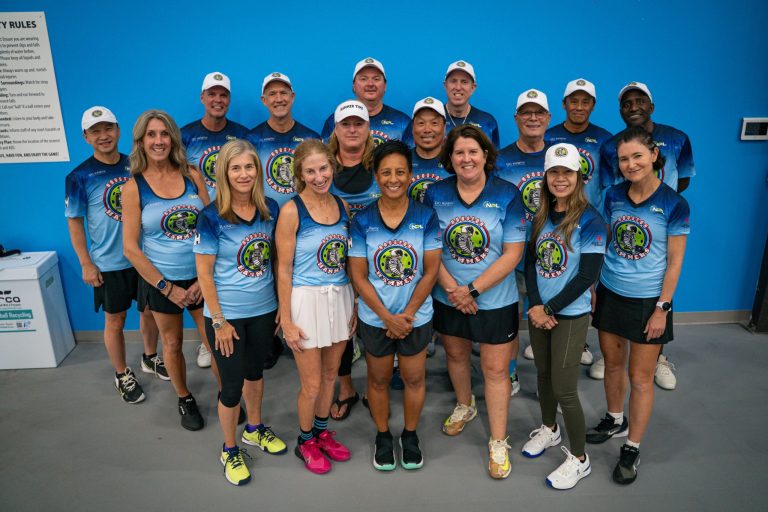
The St. Louis Shock, featuring Anna Bright, Hayden Patriquin and Gabe Tardio, remain one of the league’s headline teams. Recent defeats to the Mad Drops and New Jersey 5s have not changed that.
What has changed is the reaction.
Last season, a single regular-season loss carried significant emotional weight. This year, coach Eric Lang’s focus appears to be less about protecting a flawless record and more about communication, role clarity and keeping the group intact across a longer competitive arc.
That is season management rather than softness.
Super teams still need time
The same lesson applies to the Columbus Sliders. A roster featuring Tyra Black, CJ, Andre and Paris carries obvious talent, but an early fifth-place finish showed again that star power does not automatically create competitive rhythm.
Partnerships have to settle. Mixed dynamics have to be tested. Teams need to learn which combinations hold up under pressure, rather than which look strongest on paper.
That matters because MLP is no longer shallow enough for talent alone to cover every weakness. The calendar is heavier, the standard is deeper and the margins between the leading teams have narrowed.
Perfection has become expensive
In older versions of the league, dominance was a simpler currency. Win early, win often and carry that authority into the playoffs.
Now, perfection may come at a cost.
Trying to win every match as if it decides the season can drain emotional energy, limit tactical experimentation and leave teams chasing short-term validation instead of long-term readiness. The smartest sides are learning how to spend less during the regular season while still staying close enough to strike when the title is on the line.
The official Major League Pickleball calendar has become demanding enough that contenders need more than form. They need durability.
What this means
The MLP standings still matter. So do seeding, confidence and momentum. Nobody is arguing that losing is useful in itself.
But the league’s competitive logic is changing. The most dangerous team may no longer be the one sitting top of the table in June. It may be the one quietly learning how to lose without forgetting how to win.
Frequently asked questions
The season has become long and deep enough that chasing every win can drain energy and limit experimentation.
The St. Louis Shock and the Columbus Sliders.
Endurance and readiness for the title stages, more than week-to-week dominance.
Further reading
- Latest pickleball news from around the world
- Tournament coverage and results
- Rankings and player profiles
- Regional pickleball coverage

Chris Beaumont
Founder and Editor-in-ChiefChris Beaumont is the founder and Editor-in-Chief of World Pickleball Magazine, published by World Pickleball Media Ltd. He follows the global game closely, reporting on news, developments, stories and tournaments from all five continents. He also hosts the World Pickleball…
View All Articles →