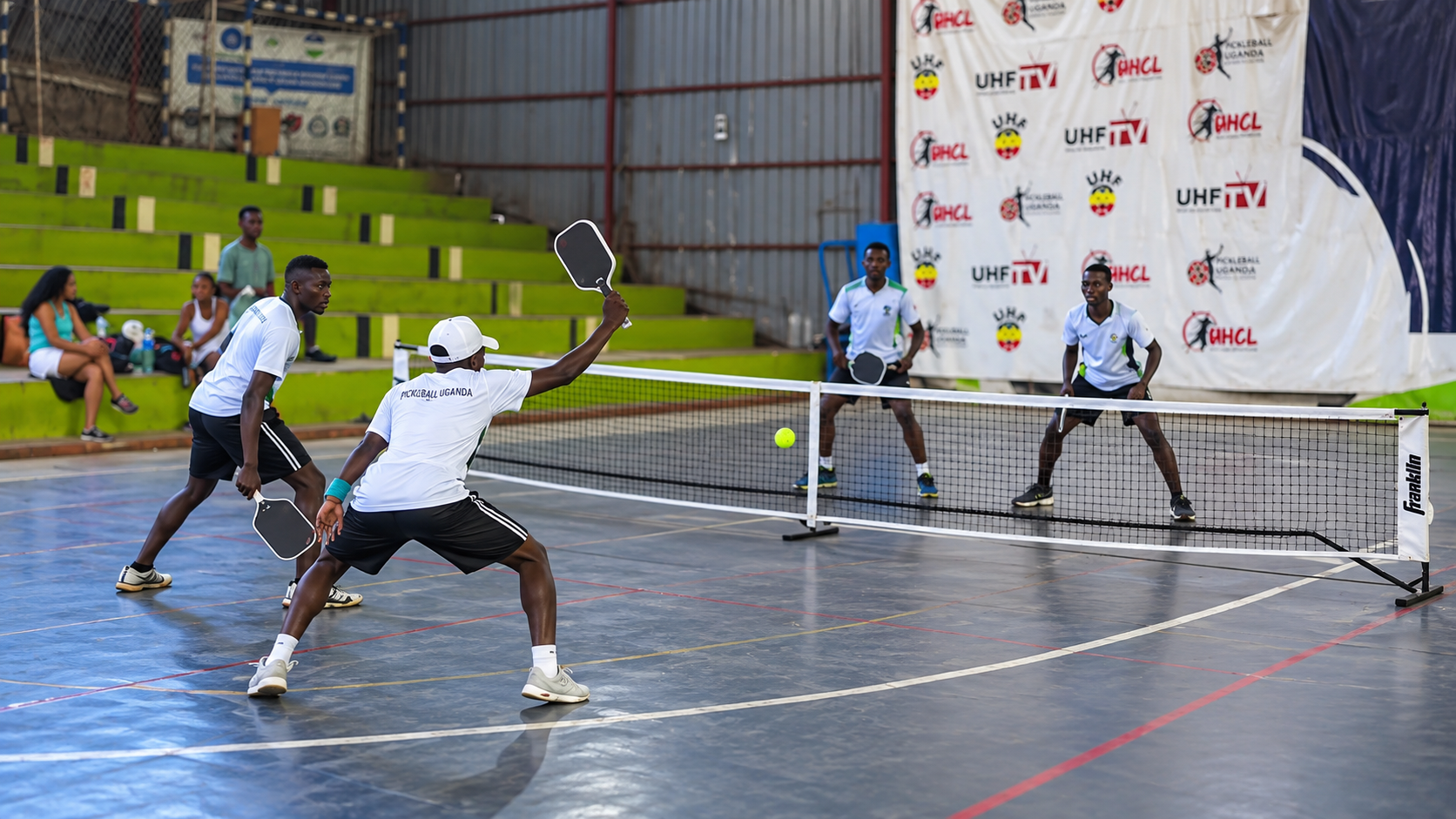
The fourth Uganda Open in Kampala drew players from Uganda, Kenya, Tanzania and Germany, as East Africa’s events begin to form a season.
The short answer: The fourth Uganda Open at Old Kampala Arena drew players from Uganda, Kenya, Tanzania and Germany, with Uganda and Kenya sharing the gold medals. With a regional championship in Dar es Salaam, a growing Tanzania Open and international events in Nairobi, East Africa’s tournaments are starting to connect into something like a regional season.
The fourth Uganda Open brought players from Uganda, Kenya, Tanzania and Germany together in Kampala, with the hosts and Kenya sharing the gold medals and participation increasing significantly from previous editions. Yet the more consequential story sits beyond one weekend: Kampala, Nairobi and Dar es Salaam are increasingly appearing on the same competitive map, as recurring opens, regional championships and repeat cross-border matchups give East African players something every developing sporting ecosystem needs — reasons to meet again.
Key takeaways
- The fourth Uganda Open at Old Kampala Arena attracted players from Uganda, Kenya, Tanzania and Germany, with Uganda and Kenya sharing the gold medals.
- East Africa’s competitive connections extend beyond individual national opens: Tanzania, Kenya, DRC and Rwanda contested an East Africa Regional Pickleball Championship in Dar es Salaam in January 2026.
- The 2025 Tanzania Open attracted 350 players from 17 countries, while its 2026 successor ran for five days with a $15,000 corporate prize pool.
- Nairobi has also hosted international competition drawing players from Uganda, Tanzania, DRC and South Africa, adding another recurring destination to the regional map.
- The next step is less about adding events than connecting them through scheduling, reliable results and competitive pathways that give players reasons to keep travelling.
The most important number from the Uganda Open may not be the size of its field.
It may be four.
Four editions mean Uganda has moved beyond the novelty of proving that a national open can be staged. According to NTV Uganda’s report from Kampala, the tournament returned to the Old Kampala Arena with players from Uganda, Kenya, Tanzania and Germany, while Pickleball Uganda Federation president Roberts Bakaze said participation had increased significantly compared with previous editions. Uganda and Kenya ultimately shared the gold medals across the tournament’s categories.
None of those facts, taken alone, establishes a major international event, nor should they be stretched into another sweeping declaration about pickleball’s expansion across Africa, a continent far too large and competitively varied for one tournament in Kampala to carry that argument.
Tighten the map, however, and the picture becomes more interesting.
Ugandan players are appearing at tournaments elsewhere in East Africa. Kenyan and Tanzanian players are travelling across the region. Nairobi has attracted competitors from neighbouring countries, while Dar es Salaam has hosted both a deliberately regional championship and an increasingly substantial international open.
What is emerging is something that has to exist before a formal tour: a reason for players to keep travelling.
East Africa has already started connecting the competition
The strongest evidence comes from what happened earlier this year.
On January 10 and 11, the 2026 East Africa Regional Pickleball Championship brought Tanzania, Kenya, the Democratic Republic of Congo and Rwanda together in Dar es Salaam, with competition across men’s and women’s singles, doubles, mixed doubles and a Junior Open.
Kenya and Tanzania dominated the podium, while Rwanda’s improvement in doubles added another competitive strand. The championship was followed in March by the Safari Rumble in Nairobi, where Kenya and Tanzania were scheduled to meet again after their Dar es Salaam contests.
We are no longer looking solely at several neighbouring countries independently staging tournaments and occasionally attracting visitors. There is already evidence of competition being organised specifically around regional relationships, with the same countries and rivalries moving between venues.
The same countries keep appearing
Dar es Salaam provides the clearest evidence that this regional activity can also support greater scale.
The Confederation of African Pickleball reported that the 2025 Tanzania Pickleball Open attracted 350 international players from 17 countries, including Uganda, Kenya, Rwanda and South Africa alongside competitors from farther afield.
The tournament returned in 2026 with a five-day programme at the Dar es Salaam Gymkhana Club. The Citizen reported a $15,000 corporate prize pool and players from more than seven countries, including Kenya, Uganda, South Africa and the Democratic Republic of Congo, alongside competitors from India, Turkey and Dubai.
WPM’s own reporting from the tournament found more than 250 players registered across 13 categories and examined why the Tanzania Open’s increasing scale matters beyond participation numbers.
Kenya supplies another part of the picture.
Nairobi Pickleball Club’s second international open brought together 75 players, with organiser Brian Omwando reporting competitors from Tanzania, Uganda, the Democratic Republic of Congo and South Africa alongside the Kenyan field.
If Uganda held an annual open populated overwhelmingly by Ugandans, Kenya did the same with Kenyans and Tanzania did the same with Tanzanians, three national scenes could develop without ever becoming a regional competitive ecosystem.
The same countries are appearing in different fields, regional championships are bringing them together deliberately and stronger players are gaining access to opposition their domestic scenes may not yet be deep enough to provide consistently.
Uganda and Kenya are giving one another something valuable
The Uganda Open makes that point particularly clearly because Kenyan participation did not stop at entering the tournament.
Kenya won.
Sharing the gold medals between Uganda and Kenya gives the cross-border relationship considerably more competitive value than a multinational entry list alone. Visiting players matter most when they alter the level of opposition, disrupt the domestic hierarchy and create matches that the host country’s strongest players cannot necessarily reproduce every week at home.
A country’s strongest players can improve quickly enough to separate themselves from an emerging domestic field, at which point development becomes harder unless stronger or simply unfamiliar opposition becomes available. Travelling internationally can solve that problem, but the economics become prohibitive if meaningful competition always requires a journey to Europe, North America or Asia.
A strong Ugandan player does not need the Kenyan scene to be globally elite for a trip across the border to have developmental value. The opponent needs to present different patterns, partnerships and problems from those available routinely at home. The same applies in reverse to Kenyan players travelling to Kampala, while Tanzania adds another player pool and events capable of bringing those competitors into contact with opposition from farther afield.
That creates the beginnings of a competitive ladder.
Domestic events create playing opportunities. Regional events widen the pool. Larger international tournaments raise the ceiling again.
Players then return home carrying experience acquired elsewhere, potentially strengthening the environment they left behind.
A fourth edition matters more than a first
The fourth Uganda Open tells us something the inaugural edition could not: organisers have been able to bring the tournament back repeatedly, players have retained enough interest to support it and neighbouring countries continue to see sufficient value in participating.
The same progression is visible elsewhere. Tanzania’s Open has returned and expanded, Nairobi has staged repeat international competition, and the East Africa Regional Championship has already given neighbouring countries an event constructed specifically around regional competition.
A circuit does not have to begin with a central organisation publishing a branded schedule and points table. Earlier in its development, it can emerge much more organically when repeat tournaments become close enough geographically and worthwhile enough competitively that players begin treating movement between them as part of their season.
The fourth Uganda Open matters because there should be a fifth
That is the context in which Kampala becomes significant.
The fourth Uganda Open did not need hundreds of international competitors or a major professional purse to prove that pickleball had suddenly arrived in East Africa. Those would be easy claims to make and difficult ones to make meaningful.
Uganda has staged the tournament four times. Participation has increased. Kenya sent players capable of winning gold. Tanzania was represented. Elsewhere in the region, Nairobi has attracted competitors from neighbouring countries, Dar es Salaam has hosted a four-nation regional championship and the Tanzania Open has demonstrated an ability to bring hundreds of players together from a much wider geography.
Each tournament becomes more valuable if the players continue moving between them.
The fourth Uganda Open has supplied another piece of the calendar. What happens between now and the fifth will tell us something more important than whether pickleball is expanding in another country.
It will tell us whether East Africa is beginning to build a season.
Frequently asked questions
Players from Uganda, Kenya, Tanzania and Germany, at Old Kampala Arena.
They were shared between Uganda and Kenya.
The East Africa Regional Championship and Tanzania Open in Dar es Salaam and international opens in Nairobi.
Further reading
- The Safari Rumble: Who Really Owns East Africa?
- The Tanzania Open Has Outgrown Itself — And That Is the Whole Point
- Zimbabwe’s Two-City Pickleball Plan Is About More Than Two Tournaments
- WPM Global Development: Tracking Pickleball’s International Infrastructure

Chris Beaumont
Founder and Editor-in-ChiefChris Beaumont is the founder and Editor-in-Chief of World Pickleball Magazine, published by World Pickleball Media Ltd. He follows the global game closely, reporting on news, developments, stories and tournaments from all five continents. He also hosts the World Pickleball…
View All Articles →