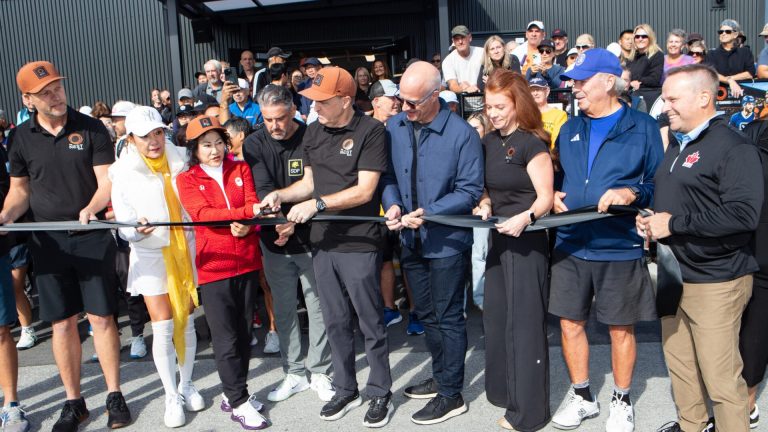

Building an ecosystem, not just hosting events
Key Takeaways
- This story reflects a key shift defining the maturity and expansion of the global pickleball landscape in July 2026.
- Decisions and infrastructure investments made now are establishing the long-term foundations of the sport.
When global conversations turn to pickleball’s future, they often begin in North America. As the sport’s birthplace and home to its two major professional tours, the United States still dominates much of the narrative.
But that focus increasingly misses one of the sport’s most coherent development stories.
Across Southeast Asia, Vietnam has built something different.
Not a series of standalone tournaments, but a connected system where infrastructure, participation, competition and commercial investment reinforce one another.
The D-Joy Tour Leg 2 in Ho Chi Minh City was the clearest expression of that model to date.
Held at the D-Joy South Saigon complex, the event was far more than a tournament week. It reflected a wider ecosystem operating year-round, with 52 dedicated courts supporting everything from grassroots play to elite international competition.
What stood out during the event was not just scale, but continuity. Families moved between matches, juniors trained alongside professionals, and courts remained active from morning until late evening. The venue felt less like a tournament site and more like a functioning sporting environment.
Infrastructure as the foundation
That infrastructure-first model is central to Vietnam’s rapid rise.
Unlike temporary event-led growth in many emerging markets, Vietnam has invested heavily in permanent facilities. D-Joy South Saigon is the clearest example — a fixed base capable of hosting both community participation and international tournaments simultaneously.
Commercial backing has followed the infrastructure.
BIDV, alongside partners including Vietnam Airlines, Coca-Cola, Facolos and Coolmate, reflects a growing recognition that pickleball is no longer a niche participation sport in Vietnam. It is a commercial platform with scale, visibility and long-term growth potential.
That alignment between infrastructure and sponsorship is one of the key reasons Vietnam’s ecosystem is advancing faster than many comparable markets.
If you're following how the global game is shifting week by week, the World Pickleball Report breaks this down every day in our morning briefing.
Roos Van Reek and a defining performance
Every major tournament produces standout performances, and Leg 2 belonged firmly to Roos Van Reek.
The Dutch star secured a rare Triple Crown, winning women’s singles, women’s doubles and mixed doubles across five days of competition.
The achievement is significant not only because of its rarity, but because of what it requires. Singles demands endurance and court coverage. Doubles rewards coordination and structure. Mixed doubles introduces a third tactical layer entirely.
Van Reek managed all three without visible drop-off in intensity or decision-making.
Her partnership with Vivian Glozman in women’s doubles combined consistency with controlled aggression, while her mixed doubles pairing with Jack Munro demonstrated composure under pressure in tightly contested matches.
By the end of the week, her performance stood out not just for titles, but for control across formats.
Jack Munro’s resilience under pressure
While Van Reek’s Triple Crown dominated headlines, Jack Munro’s week told a different story.
The Australian competed through illness yet remained highly effective in key moments, relying on experience and decision-making rather than physical dominance.
Rather than forcing play, Munro adjusted his approach, reducing unnecessary physical load while maintaining structure in both positioning and shot selection.
If you’re following how the global game is shifting day by day, the World Pickleball Report breaks this down in our daily briefing.
In mixed doubles alongside Van Reek, that adaptability became critical. The pair opted for control over risk, relying on consistency to close out matches in difficult conditions.
It was a reminder that elite competition is often defined less by peak performance and more by adaptability under constraint.
Vietnam’s domestic breakthrough
For the home crowd, the defining moment came in men’s singles, where Phúc Huỳnh defeated Quang Duong to claim a landmark victory.
Beyond the result itself, the significance lay in what it represented.
Vietnam’s domestic players are no longer simply participants in international tournaments. They are now genuine contenders.
That shift is the product of sustained exposure to high-level competition and consistent investment in local development pathways.
Alongside Huỳnh, players such as Trịnh Linh Giang continue to strengthen Vietnam’s presence on the international stage, forming a competitive core that is increasingly visible beyond national borders.
Asia’s growing competitive depth
One of the strongest themes of the tournament was the breadth of international representation in final rounds.
India produced one of its most notable performances to date, with Arjun Singh and Naomi Amalsadiwala reaching the mixed doubles final after a series of impressive victories over more established pairs.
Their run highlighted both the depth and unpredictability of emerging Asian competition.
In men’s doubles, cross-border partnerships also featured prominently, with India’s Harsh Mehta partnering Quang Duong to secure the title. These combinations are becoming increasingly common across Asian events, reflecting a more integrated competitive environment.
More than a tournament
The success of D-Joy Tour Leg 2 cannot be measured solely in results or participation figures.
Its significance lies in structure.
Vietnam has built an ecosystem where participation feeds competition, competition attracts commercial support, and commercial support reinforces infrastructure investment.
Each layer strengthens the next.
That cycle is what separates rapid growth from sustainable development.
The BIDV Cup 2026 | D-Joy Pickleball Tour Leg 2 did not just showcase one of Asia’s most advanced pickleball events.
It demonstrated a system already operating at scale.
And in doing so, it highlighted a shift that is becoming harder to ignore.
Vietnam is no longer simply part of Asia’s pickleball growth story.
It is helping define what that growth looks like.
📖 Read the Full July 2026 Issue
This article appears in Issue #18 of World Pickleball Magazine — download the complete edition free.
Further Reading
- Latest pickleball news from around the world
- Tournament coverage and results
- Rankings and player profiles
- Regional pickleball coverage
For a clearer view of where the sport is heading each week, you can join the World Pickleball Report here.

Chris Beaumont
Founder and Editor-in-ChiefChris Beaumont is the founder and Editor-in-Chief of World Pickleball Magazine, published by World Pickleball Media Ltd. He follows the global game closely, reporting on news, developments, stories and tournaments from all five continents. He also hosts the World Pickleball…
View All Articles →