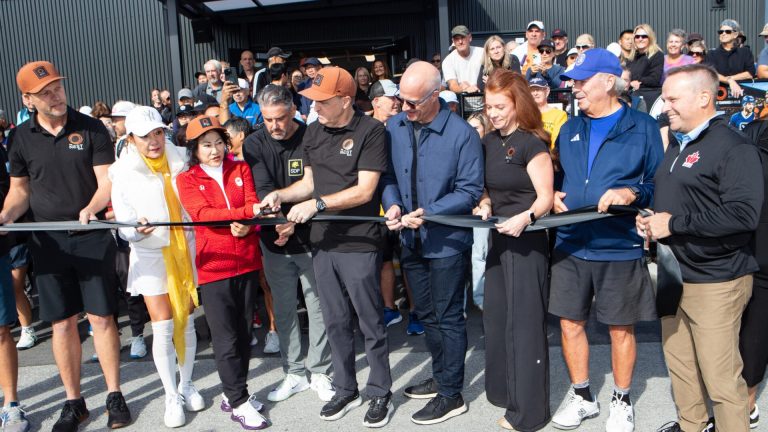

Samin Odhwani is preparing to leave MLP. His successor inherits record audiences, 20 ownership groups and a new player-acquisition system.
The short answer: Samin Odhwani is preparing to step down as Major League Pickleball commissioner once a successor is agreed. The next commissioner inherits record audiences, including 773,000 average viewers for the 2026 Finals on CBS, 20 ownership groups, a proposed 2027 acquisition system with a $1 million team cap, and a league inside Pickleball Inc. The mandate matters as much as the name.
Samin Odhwani is preparing to leave Major League Pickleball after a season of record audiences and attendance, with his departure contingent on a successor being agreed. That has inevitably produced speculation about who comes next, but MLP’s more consequential decision is what comes next: the person inheriting the league will arrive as its media value is increasing, its 20 ownership groups face a major reset in player-acquisition economics, its franchises still have local markets to build and its place inside the increasingly powerful Pickleball Inc. structure is being defined.
Key takeaways
- MLP commissioner Samin Odhwani is preparing to leave the role, with his transition reportedly contingent upon a successor being agreed.
- The next commissioner inherits a league that has just reported record television audiences and attendance, including 773,000 average viewers for the 2026 Finals on CBS.
- MLP’s proposed 2027 player-acquisition system would introduce a $1 million team cap and $500,000 floor, but the reported figures concern acquisition values rather than player salaries and the rules were not final when disclosed.
- The role now requires alignment across 20 franchise ownership groups while MLP operates inside Pickleball Inc., the parent company created following Apollo Sports Capital’s $225 million structured investment.
- The appointment may reveal as much through its mandate and organisational structure as through the identity of the successful candidate.
Major League Pickleball has a commissioner vacancy to fill.
It also has a job description to rewrite.
Those are not quite the same problem.
Samin Odhwani is preparing to move from his role as MLP commissioner into a position with Apollo Sports Capital and SC Holdings overseeing their investment in Pickleball Inc., according to reporting by The Dink, with the transition contingent upon an agreed replacement. His departure would follow the most commercially significant season in MLP’s short history, with the league reporting records across television audiences, streaming consumption and attendance.
The numbers matter because they change the nature of the succession.
According to MLP’s 2026 season review, the Finals averaged 773,000 viewers on CBS, while FS1 reached 146,000 viewers during the Orlando regular-season finale and Tennis Channel averaged 89,000 for its Finals coverage. MLP content on Pickleballtv exceeded 415 million minutes viewed, up 32 per cent compared with 13 events in 2025, while average daily attendance across 51 event days approached 1,500, a 69 per cent increase.
Those are league-reported metrics rather than evidence by themselves of franchise profitability or long-term financial sustainability, but they provide the next commissioner with something previous MLP leadership teams spent years trying to establish: meaningful evidence that an audience exists for the product.
Above the league, meanwhile, the business has changed dramatically.
In May, Apollo Sports Capital led a $225 million structured investment in Pickleball Inc., creating a parent company encompassing the PPA Tour and MLP alongside businesses spanning media, retail, technology and infrastructure. The official announcement said those combined verticals generated more than $140 million in revenue during 2025, with Tom Dundon and the Pardoe family remaining majority shareholders.
WPM examined the implications of that consolidation when the deal was announced: Apollo had not simply invested in a professional league, but in an increasingly integrated pickleball ecosystem.
The next MLP commissioner therefore inherits a league that is simultaneously stronger and more complicated than the one Odhwani took over.
Twenty franchises now compete at one level. Media audiences are larger. Owners have invested significant capital and increasingly have their own commercial ambitions. The player-acquisition system is approaching an important reset. The league’s city-based franchises still have deeper relationships to build with the markets whose names they carry.
And MLP itself is no longer an island.
That makes debating a speculative shortlist considerably less important than understanding what the successful candidate will actually be required to do.
The job has changed because MLP has changed
Commissioner searches naturally gravitate towards résumés.
Who has run a league before? Who understands media? Who knows pickleball? Who can manage owners? Who has commercial credibility? Who can represent the sport publicly?
The Dink has proposed ten potential successors, but its author explicitly states that the names are his own speculative choices, not reported candidates or finalists.
The useful part of that exercise is therefore not ranking the names.
It is recognising how many different executive profiles could plausibly fit the position.
The commissioner who helps a young league establish legitimacy does not necessarily possess the same skill set required when that league begins converting larger audiences into greater media value, regulating owner spending, developing local franchise economics and operating inside a parent company backed by institutional capital.
MLP no longer needs somebody simply capable of making the league larger.
It needs somebody capable of making its different parts work together.
The media question is no longer simply about getting on television
Odhwani’s tenure produced measurable progress in distribution and audience.
The 773,000 average audience on CBS for the 2026 Finals was an MLP record and 55 per cent higher than the previous year’s Finals coverage on the network. FS1 and Tennis Channel also produced network highs for MLP during 2026, while Pickleballtv consumption increased.
Those numbers strengthen MLP’s position as professional pickleball approaches its next media phase.
They also make the commissioner’s media responsibility more complicated.
Earlier in MLP’s development, the central challenge was visibility: secure distribution, put the product in front of viewers and demonstrate that team pickleball could generate an audience.
The next challenge is value.
Reporting around Odhwani’s move has identified a comprehensive long-term media-rights agreement as one of the significant opportunities still facing the wider Pickleball Inc. business. The organisation potentially negotiating that future is no longer simply MLP operating alone.
Pickleball Inc. now contains both the PPA Tour and Major League Pickleball, while Pickleballtv itself is a joint venture between Pickleball Inc. and Tennis Channel.
For MLP’s commissioner, that creates a subtle but important distinction.
The job may not be to negotiate a television agreement independently.
It may be to make MLP indispensable to whatever wider media strategy Pickleball Inc. ultimately pursues.
That requires a clear understanding of what makes the league different. MLP offers something conventional tournament pickleball cannot reproduce exactly: city-based teams, men and women contributing towards the same result, a compact match structure, repeat franchise narratives and the possibility of an audience identifying with a team rather than only with individual players.
Those differences should create value.
The commissioner’s responsibility is to ensure they do.
If MLP becomes simply another block of professional pickleball inventory inside a larger rights package, some of the strategic rationale for developing a franchise league becomes weaker. If it protects its identity so aggressively that it cannot benefit from Pickleball Inc.’s combined scale, consolidation loses part of its purpose.
The next commissioner therefore needs to advocate for MLP without isolating it.
That balance may be one of the defining requirements of the job.
Twenty ownership groups turn governance into strategy
Media may be the most visible commercial opportunity.
Owner alignment could be the more difficult leadership problem.
MLP entered 2026 with 20 teams competing at one level following the removal of its Premier and Challenger designations, but those ownership groups do not arrive at league decisions with identical objectives, resources or appetites for spending.
That became unusually visible in July when leadership from the St. Louis Shock and California Black Bears clashed publicly over team spending and the prospect of a cap and floor.
The underlying tension is familiar across franchise sport but particularly important in a young league.
Owners need enough freedom to believe investment can create competitive and commercial advantage. The league needs enough control to prevent spending from creating instability, damaging competitive balance or producing an economic arms race that some franchises cannot sustain.
Those objectives inevitably collide.
A well-capitalised ownership group can reasonably ask why it should commit substantial resources to a sports property and then face restrictions on how aggressively it can construct its roster. Another owner can equally argue that the collective value of the league deteriorates if competitive success becomes overwhelmingly connected to willingness to spend.
The commissioner sits between them.
That makes the role different from running a conventional tour, where the central relationships are predominantly with players, events, sponsors and broadcasters. MLP has those constituencies too, but adds 20 businesses whose owners have invested in the belief that the league itself can create increasing franchise value.
The commissioner is therefore not simply administering competition.
The commissioner is mediating an economic compact.
The 2027 rules could define the commissioner’s authority early
The timing of the succession makes that governance challenge immediate.
In July, Pickleball.com obtained a copy of proposed rules for MLP’s 2027 player-acquisition process. They had not been finalised at the time of publication, and that qualification matters.
The proposals included a $1 million player-acquisition cap for each team and a $500,000 floor, together with a proposed maximum acquisition value for an individual player somewhere between $600,000 and $800,000 and a limited right-of-first-refusal mechanism.
Those figures should not be described as player salaries.
MLP’s auction values represent what a franchise allocates towards acquiring a player’s rights within the league’s roster-building system; the acquisition amount does not become that player’s salary.
The distinction is important because the rules are attempting to regulate roster construction rather than directly impose a conventional payroll cap.
They also arrive at a significant moment.
Players drafted in 2024 could be kept for a maximum of three years, meaning many of the league’s leading players must return to the player pool after 2026. The proposed right-of-first-refusal system would allow teams a limited mechanism for retaining one released player while preserving wider movement across the league.
WPM examined the uncertainty surrounding those 2027 rules during the July trade window, when teams were already having to judge current player value without knowing precisely what the following season’s system would become.
The broader question remains unresolved even if the eventual numbers change.
How much roster stability does a franchise league need?
Drafts and player movement create offseason interest, redistribute talent and can prevent a competitive hierarchy becoming permanently fixed. Too much movement produces another problem: if supporters are being asked to follow city-based teams, those teams need identities capable of surviving beyond their logos.
The 2027 model therefore has to balance several assets simultaneously — competitive balance, franchise identity, roster flexibility and a player market owners consider workable.
The next commissioner may inherit that system almost immediately.
A city name has to become more than a badge
Roster continuity leads directly into another unfinished piece of MLP’s model.
Local identity.
The league’s franchises carry city and regional identities, but its competition remains fundamentally a travelling product. In 2026, each team appeared at five of nine regular-season events, with the Mid-Season Tournament and an expanded three-week playoff structure sitting around that schedule.
That model solves several logistical problems.
It also creates a commercial one.
A franchise carrying the name of St. Louis, Brooklyn or Palm Beach eventually needs its location to represent more than a word on a shirt.
The long-term value of a franchise model lies partly in its ability to create multiple businesses beneath the league itself. Teams should be capable of developing their own sponsorship relationships, supporters, community programmes, commercial partnerships, merchandise demand and media identities.
MLP already possesses unusual visibility through its ownership groups. In December 2025, the league said its team ownership ranks included more than 80 celebrities and professional athletes.
That creates attention.
It does not automatically create fandom.
Celebrity ownership can introduce somebody to a franchise. It cannot be the only reason they care about it.
The reported 2027 proposals are interesting here too, because they include requirements for teams to promote themselves locally and incentives for hosting events and otherwise helping develop the league.
The commissioner therefore has to help define a two-way bargain.
What does MLP owe its franchises?
And what do those franchises owe MLP?
Competitive parity and commercial parity are different things
That distinction becomes increasingly important as MLP matures.
During the earliest phase of a sports league, almost every positive league-level development can increase confidence around every franchise. Better television distribution helps everyone. Larger crowds help everyone. New sponsors help everyone. Fresh investment into the parent company strengthens confidence around the ecosystem.
Eventually, however, franchises have to differentiate themselves.
One team may become better than another at generating local sponsorship. Another might build a larger social audience. Another could develop stronger community participation, merchandise demand or hospitality.
That is not necessarily a weakness in the model.
It is what happens when franchises become businesses rather than interchangeable stakes in the same league.
The commissioner’s role is therefore not to guarantee equal commercial outcomes for 20 ownership groups. It is to create conditions in which those ownership groups have meaningful opportunities to build value while preserving enough collective discipline for the league itself to remain coherent.
Competitive parity and commercial parity are not the same thing.
MLP can regulate how aggressively franchises acquire players while simultaneously expecting those same organisations to compete far more aggressively in sponsorship, marketing, community development and audience creation.
Spend within agreed boundaries on the court.
Compete relentlessly off it.
That could become an important principle of MLP’s next phase.
The commissioner now works inside Pickleball Inc.
Perhaps the largest structural difference facing Odhwani’s successor sits above MLP itself.
Pickleball Inc. now encompasses MLP and the PPA Tour alongside businesses spanning media, retail, software, ecommerce and infrastructure. Its creation followed Apollo Sports Capital’s $225 million structured investment, while the official announcement put the combined 2025 revenue of the merged verticals above $140 million.
For a wider examination of that concentration of assets, WPM recently asked who owns the commercial structure of pickleball in 2026.
The scale creates obvious advantages.
Media can potentially be packaged more effectively. Sponsorship relationships can cross properties. Technology and infrastructure can be shared. Commercial data becomes more useful when it covers several parts of the same ecosystem.
It also makes the commissioner’s authority more complicated.
The commissioner must represent MLP’s sporting and franchise interests while working within a company whose priorities extend far beyond one league.
Those interests will often align.
They will not always align perfectly.
A scheduling decision that benefits one property can create pressure elsewhere. A media package optimised for Pickleball Inc. as a whole may not maximise MLP’s standalone value. International opportunities compete for management attention and capital. Player decisions can affect both the PPA Tour and MLP because many of the same professionals participate in both.
The commissioner’s job therefore requires enough authority to advocate for the league without recreating the internal competition that consolidation was intended to reduce.
That raises the governance question sitting underneath the entire succession.
Who does the MLP commissioner ultimately represent when those interests diverge?
Pickleball Inc.? League management? Twenty franchise ownership groups? The integrity and development of the sporting product?
The practical answer will involve all of them.
The effectiveness of the role will depend upon how clearly those responsibilities are defined when they do not point in exactly the same direction.
The appointment will tell us how Pickleball Inc. sees MLP
That is why the organisational mandate may reveal more than the identity of the successful candidate.
If Pickleball Inc. hires an external sports executive with deep experience in franchise management, it would indicate one set of priorities. A commissioner drawn from media or commercial sport would bring another profile, while an internal pickleball operator could suggest continuity and knowledge of the existing ecosystem are particularly important.
If the commissioner arrives alongside a powerful deputy, president or operating executive, the most significant message may be that Pickleball Inc. no longer believes the MLP leadership portfolio belongs inside one job.
None of those structures automatically provides the answer.
They solve different problems.
The useful question when the announcement arrives will therefore not simply be whether the new commissioner has an impressive résumé.
It will be why this résumé, for this version of MLP, at this moment.
International expansion already has a live experiment
The same discipline should apply internationally.
MLP no longer has to discuss internationalisation entirely in the abstract.
MLP Asia’s inaugural six franchises have now completed their roster construction ahead of a November launch, creating a real-world experiment in how the team concept can operate outside the United States.
Crucially, the model has not simply copied the American league.
Each MLP Asia franchise began by selecting three domestic players before adding three international players, guaranteeing that half of every roster belongs to its home market. The International Draft then used a financial structure that forced franchises to value talent within an Asian competitive context rather than merely importing the most recognisable American names.
As WPM found after the International Draft, five of the first six international selections had strong competitive connections to Asia, while several established American professionals went undrafted.
That distinction matters for the US commissioner because it illustrates the strategic question international expansion now presents.
What exactly is MLP trying to internationalise?
The competition format? The brand? Franchise economics? Player pathways? Commercial relationships between regional leagues?
MLP Asia suggests one possible answer: export the concept while allowing the market to develop its own identity.
The US league does not necessarily need to control every version of team pickleball abroad for those competitions to increase the value of the wider MLP idea. Equally, international expansion should not distract from unfinished work around local franchise identity, roster economics and media value in the United States.
Being present in more countries does not automatically make a league stronger.
Knowing what those international properties are supposed to contribute might.
The sporting product remains the reason any of this has value
There is a danger in analysing commissioners through media rights, investment, governance and franchise economics that the sport itself disappears.
MLP cannot allow that to happen.
The league’s commercial opportunity exists because its product is distinctive.
Under the current MLPlay format, team matches consist of women’s doubles, men’s doubles and two mixed-doubles games, with a DreamBreaker deciding the contest if the match finishes 2-2. Men and women therefore contribute towards the same franchise result, while the possibility of rotational singles creates a different competitive pressure from conventional tournament pickleball.
The 2026 season paired that product with the strongest audience numbers MLP has yet reported.
That does not mean the competitive format is finished.
Rules need to remain understandable as new viewers arrive. Scheduling has to produce legitimate standings. Player-acquisition systems must encourage competitive balance without making rosters feel artificial. Officiating and event operations face greater scrutiny as audiences increase.
There is also a subtler risk.
The more commercially sophisticated MLP becomes, the easier it is to optimise the product around everything except the actual competition.
Broadcast windows matter. Sponsor inventory matters. Celebrity involvement matters. Social content matters. Venue atmosphere matters.
But none can compensate indefinitely for a sporting product supporters do not trust.
The commissioner does not need to write every rule.
The commissioner does need to understand that every other asset being discussed in this succession — rights, franchises, sponsorship, international expansion and institutional investment — ultimately derives its value from the competition itself.
The business sits on top of the sport.
Not the other way around.
MLP may have outgrown the idea of one all-purpose commissioner
That brings the discussion back to the size of the job.
Media strategy. Twenty ownership groups. Player relations. Competition governance. Local-market development. Sponsorship. Event operations. Pickleball Inc. integration. International strategy. Public representation of the league.
Any commissioner of a major sports organisation carries a broad portfolio, but MLP’s particular difficulty is that several of these functions are still being built at the same time.
The Dink’s candidate analysis argues that MLP should consider separating commissioner and deputy commissioner functions, potentially combining external sports-business experience with an internal executive who understands professional pickleball’s existing machinery.
That is one proposed solution, not evidence of MLP’s intended structure.
The underlying question is more useful.
Has the league reached the point where organisational design matters as much as individual recruitment?
A young organisation often depends upon executives carrying several functions simultaneously because the business has neither the scale nor resources to divide them cleanly. As the organisation becomes larger, specialisation becomes possible and eventually necessary.
MLP’s next leadership structure should reflect the organisation it is trying to become, not simply the one it needed three years ago.
The succession process is therefore an opportunity to ask whether “commissioner” still describes one job.
The mandate matters more than the shortlist
There will be speculation until the appointment is made.
Some potential candidates will know pickleball intimately. Others may have run established sports properties, negotiated media agreements, managed franchises or built commercial organisations. The Dink’s list offers examples of several of those profiles, but its author is explicit that the names are speculative and are not based on insider information.
That is why WPM’s attention should remain on the mandate.
How much authority will the commissioner have over competition?
What responsibility sits with Pickleball Inc.?
How will the commissioner represent franchise owners when their interests diverge from the wider parent company?
Who controls media strategy?
Who owns international development?
How much responsibility will franchises themselves carry for creating local value?
And will the commissioner have an operating structure beneath them capable of handling a league whose complexity has increased alongside its audience?
Those questions define the next phase of MLP more clearly than any speculative list of names.
Odhwani’s eventual successor will inherit something his predecessors spent years trying to create: evidence.
The audience is larger. Attendance is higher. Franchise ownership carries greater commercial relevance. The parent company has substantially more capital behind it. MLP enters its next phase with stronger proof that people will watch team pickleball than it possessed when Odhwani became commissioner.
That changes the standard.
The next commissioner does not simply have to prove Major League Pickleball can work.
They have to align 20 franchises around how it should work, establish where MLP fits inside Pickleball Inc., turn larger audiences into greater media value, preserve a credible sporting product and help city names become businesses supporters actually care about.
That is considerably more than filling a vacancy.
It is deciding what the commissioner’s office is now for.
And before Major League Pickleball decides who should have that job, it needs to be very clear about how big the job has become.
Frequently asked questions
He is preparing to leave, with his departure reportedly contingent on a successor being agreed.
An average of 773,000 on CBS.
$1 million, with a $500,000 floor, covering acquisition values rather than salaries.
Further reading
- MLP’s Trade Market Is Open. Its 2027 Rules Are Still Being Written
- Pickleball Inc. Secures $225m Apollo Investment as PPA Tour and MLP Move Under One Platform
- Who Owns Pickleball in 2026? The Business of the Sport
- MLP Asia Has Its Teams. Now We Can See What Kind of League It Wants to Be
- Gary Vee Bet Early on Pickleball. Was He Right?

Chris Beaumont
Founder and Editor-in-ChiefChris Beaumont is the founder and Editor-in-Chief of World Pickleball Magazine, published by World Pickleball Media Ltd. He follows the global game closely, reporting on news, developments, stories and tournaments from all five continents. He also hosts the World Pickleball…
View All Articles →